Belief in God is a Human Compulsion!
Someday hopefully, humans will have all the answers. Will we forget Got then?
Many individuals around the world completely reject the idea of God, either for the perceived societal problems this belief causes, or because they cannot accept the existence of an entity who cannot be experienced or logically proved.
Of course, there are those who argue that they have indeed experienced God. Also, there are plenty who, despite not having experienced God themselves, offer various forms of evidence as proof.
But standards of evidence differ and often do not match what modern society has come to expect. Today, acceptable standards are largely shaped by the scientific community and typically require repeatability and measurability. So, “God has not been proven to exist” is generally accepted as fact — by non-believers as well as most believers.
Non-believers or atheists however, are a minority. Most humans, despite lacking sufficient evidence, believe in one form of God or another. And one is forced to wonder: why? How? The question is not just about whether God exists or not. One must also ask how anyone knows about God at all — particularly if few have seen or experienced God?
Indoctrinated, Are We..?
One might argue that the seed of that idea is planted into our minds early in our life, and we grow up believing it to be true. Then, just like an elephant chained to a post from birth does not attempt to escape after becoming strong enough to do so, most adult humans too support and even defend the idea of God. Atheists, it might be argued, could be ones who are either raised differently, or are able to mentally overcome the training, grow up to question the idea, and eventually reject it. Such arguments suggest that our belief in God is a case of indoctrination.
The oft-used argument against the existence of God — “Who created God?”, might be applied to the “idea of God”. If we accept that no one has experienced God — then where did that concept originate? The idea could have germinated in the minds of a few imaginative individuals. They might then have been able to influence their societies, and so cause the idea to propagate. That would be logical. But considering that this belief exists in most societies, separated by geography and amongst populations unable to influence one another, it is surprising that God as an entity is so similar all over the world! For this to be a coincidence is hard to believe. In fact, this very fact is often quoted as proof that God exists.
Of course, I am primarily referring here to the most common human conception of a personal God — a conscious, protective, judicious entity concerned with human life, morality, suffering, and desire. More abstract and philosophically sophisticated conceptions of divinity also exist, including the impersonal God of Baruch Spinoza and the Vedantic Brahman. However, such ideas generally require a much higher degree of philosophical abstraction than the intuitive, deeply personal image of God held by most people.
Anyway, so we know of God. But what if instead of being planted, the idea was always present in our mind? That is the possibility I will argue here.
Our Instincts… and the Knowledge Behind Them
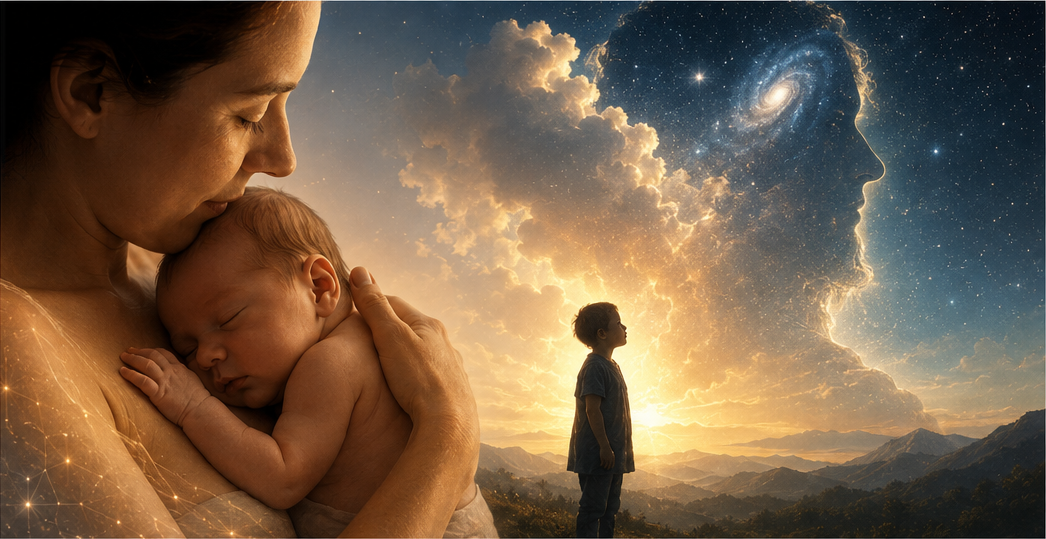
Recently, a colleague of mine had premature twins. During the three months the babies spent in NICU, the mother was asked to visit daily, hold the babies and maintain close physical contact. This she did for several minutes to an hour each day, even while several pipes and wires remained attached to the infants. This treatment is well established and has a name — “Kangaroo Mother Care”.
Even normal babies receive this treatment immediately after birth, during what is referred to as “The Golden Hour”. This action induces several chemical changes in both the baby and mother. This helps the baby in many ways, including immediate calming and stabilization of heartbeat, breathing and body temperature. Clearly, this action causes the baby to feel secure.
The proximity to mother also triggers the urge to breastfeed, stimulates digestion and soon has the baby feeding. The remarkable part about this activity is how the baby knows exactly how to breastfeed. Often it might take a little time, but eventually the baby is able to do all that is required to eat. For someone who has just entered the world, untrained, never having breastfed or witnessed another baby breastfeeding, she still somehow seems to know exactly what to do! Clearly, the required behavioral tendency comes pre-programmed in the baby — an inheritance shared across humans.
As with the knowledge to feed, the baby also knows that there exists a person who will take care of her under any circumstances — her savior, her protector! The Golden Hour action helps validate her belief. Typically, this savior happens to be a mother.
Genetic Memory… Programming for Survival
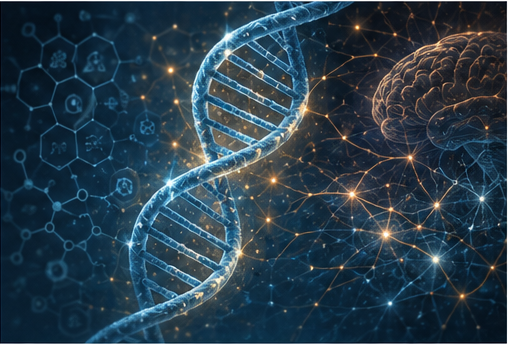
These are examples of information encoded in DNA — something I will refer to as “genetic memory”. Here, I use the term in the broad sense of inherited biological information: tendencies encoded into our genes that predispose us toward certain instincts and survival-oriented behaviors. I do not mean literal inherited memories in the conventional neurological sense.
It is this information which evokes the instincts and resulting action which help the baby survive — no training needed. Also, these instincts are fully justified, because complementary tendencies exist in the mother’s genetic memory as well — it causes the mother to fiercely protect her baby, exactly as the baby needs.
We also know that such behavior is not limited to humans but is exhibited throughout the animal world. Not even just a mother bear, we all know to never surprise, even the most harmless mother — say a duck, in a way that might indicate danger to her babies.
We are born with several such instincts that help us survive and thrive — for example we fear heights and darkness, and our ability to fall in love enables us to procreate and thus help our species survive. All such instincts require some form of memory, such as memory to recognize height, or memory of looks that we find attractive. This is the kind of knowledge that comes embedded in our genetic memories.
Another Memory in Our Genes?
Just as we are all born with the “memory of our savior”, is it possible that we are born also with the “memory of God”? If true, then that would explain how humans everywhere imagine God with similar qualities. And just like with a mother for a child, we adults constantly seek protection and resolution to our problems with God.
However, while a mother’s presence in a child’s life serves a very real purpose, the evolutionary purpose of God is not so clear. Might the memory of God be intended to provide us eternal hope? Or maybe, the memory is a true reflection of a very real entity — one just as real as our mothers?! In the latter case, the epistemic basis of our belief in God might simply be a gut feeling. Isn’t that also how we know love is real?
But Seriously, Is Love Even Real?
On the other hand there is a possible, contradictory point of view. What if the “memory of God” is not that at all? What if it is just another manifestation of the existing “memory of our savior”? Think about it — at birth we immediately seek a ‘savior’ and find one in our mother. She seems to have the power to fulfill all our needs, somehow knows everything we are thinking and appears to be everywhere we look! Soon we realize our savior is also our ‘Creator’. This adds to our memory of the savior and builds a complete picture.
Gradually though we begin to notice her limitations. As we grow, she can help us less, and eventually hardly at all. But we cannot erase the memory of our savior — after all it is designed to last forever, even be transmitted to our later generations. So, we begin to imagine a different savior instead — someone who is all-knowing, all-powerful, omnipresent. Unfortunately, with mother’s limitations recognized, her replacement has to be different, better. So, this new entity didn’t just create us, but the entire universe. And in many historically patriarchal societies, God often came to be imagined in male form, and continues to be depicted as such in most religions. Soon, God does not need to be imagined anymore, his existence is preached as fact.
The Atheist’s Temple

Finally, whether God actually exists or not, belief in God appears to be firmly ingrained in our memories. Most religious systems and philosophies incorporate some form of belief in God. Not because a devious founder decided to induce and leverage the fear of God into our minds, but instead because they decided, with well-meant intentions, to institutionalize what they believed in their gut to be true. In response, other humans became followers, because they too had the same gut feeling.
Yet, there are a few religious belief systems that follow atheistic philosophies too. Most of these religions however, build temples with idols or images of their founders, and their practices include prayers and rituals similar to theistic religions. Followers of these atheistic traditions often exhibit devotion towards their founders in ways that resemble how others relate to God. All this, despite the philosophies preached by the founders! Such behavior demonstrates the strength of unforgettable memories embedded deep in our DNA. No matter how much we know or how strongly our minds wish to follow scientific logic or atheistic philosophy, our heart — or more accurately, our DNA — will draw us back to who we view as God, each time we are in trouble. Belief in God is a human compulsion!
📬 This is Part 1 of an interconnected series exploring the evolutionary psychology of human faith.
- Subscribe, so you don’t miss the next installment.
What are your thoughts on genetic memory vs. indoctrination? Let’s discuss in the comments below!