Hinduism: Religion, Way of Life, or something else?
Exploring the Tradition as a Knowledge System
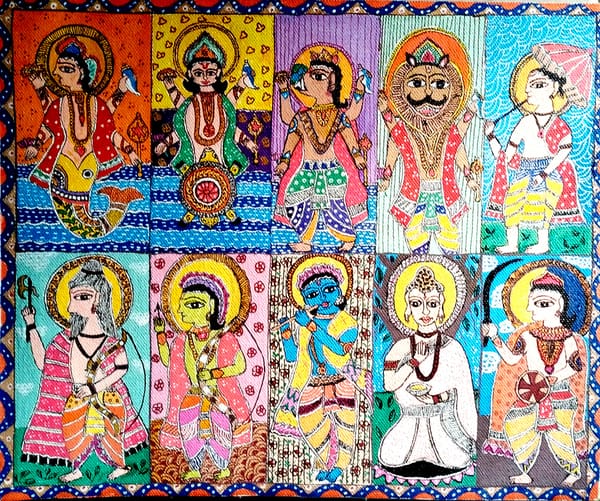
Hinduism means many different things to different people. While it is classified among the world’s major religions, many describe it simply as a “way of life”. I believe that it is both — a way of life, certainly, but undoubtedly also a religion.
In fact, Hindu traditions go far beyond either of those categories. They actively incorporate deep inquiry into philosophy, psychology, linguistics, cosmology, mathematics, and other proto-scientific domains. For this reason, in my opinion, Hinduism is best described as a “Knowledge System.”
Its pursuit has not been limited to any single domain of inquiry, but instead was driven by an open-ended search for knowledge in any form. Religious thought and guidelines for daily living are only some of the outcomes of this system.
The Continuous Pursuit of Truth
As a civilizational tradition, Hinduism places a remarkably high value on knowledge. It is often described as a continuous, open-ended pursuit of ultimate truth. Hindu scriptures are filled with direct mentions of truth-seeking as a foundational principle.
Because the ultimate goal of many Hindu philosophical systems — liberation (moksha) — requires the realization of ultimate reality, the search for truth is not optional. It is a central, non-negotiable concern of the tradition.
Before diving deeper, I will make a few clarifications. While I occasionally conflate the idea of “ultimate truth” with “knowledge,” some scholars consider them distinct. Furthermore, Hindu traditions allow for multiple paths to discover this truth. Bhakti, the devotional tradition, for example, is a deeply spiritual path that some might not strictly classify as “knowledge-based.”
Additionally, although the words “Hindu” and “Hinduism” are globally recognized and well-understood, “Hindu” was originally a term coined by outsiders to refer to people of a specific geographic region who followed traditions different from their own. Practitioners historically refer to the tradition as Sanatan Dharma and identify themselves as Sanatanis. For ease of modern communication, we will use the terms “Hindu” and “Hinduism” here.
My goal in this article is to walk through the intellectual history of Hinduism, focusing specifically on identifying the characteristics that mirror other global “Knowledge Systems.” In later essays, I will explore how this system came to encompass religion, develop everyday lifestyle guidelines, and direct rigorous inquiry into early scientific and other fields.
Vedas and the Role of Knowledge Preservation
A robust Knowledge System must include the pursuit of knowledge itself. However, it must also include processes to validate that knowledge, alongside the infrastructure to preserve and disseminate it.
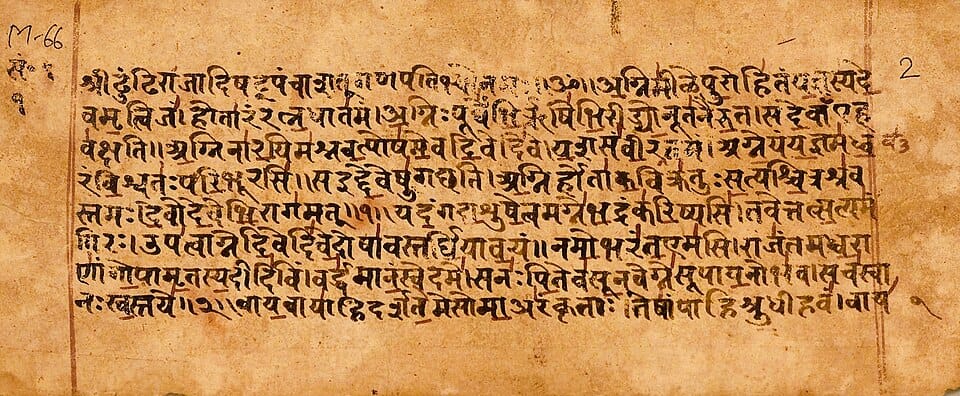
In Hinduism, this preservation role was fulfilled by the Vedas — among the oldest literatures in the world, which remarkably pre-date writing. Traditionally, accepting the authority of the Vedas is a requirement for being considered an orthodox Hindu.
To draw a modern parallel: accepting the Vedas functions much like how a citizen is required to accept the authority of a nation’s constitution.
Incidentally, the word Veda literally translates to “knowledge,” deriving directly from the Sanskrit root vid-, meaning “to know.”
Vedas and Their Support of Multiple Viewpoints
It is vital to recognize that accepting the authority of the Vedas does not mean agreeing with all of their contents. In fact, total agreement is impossible, because the Vedas themselves preserve multiple competing viewpoints, interpretations, and philosophical positions.
This plurality of viewpoints is precisely why Hinduism is often described as an umbrella of different traditions rather than a single, rigid doctrinal system. It explains why Hindu beliefs and practices vary so widely across geography and communities.
Why do the Vedas deliberately preserve competing viewpoints? This open architecture is a classic trait of a healthy Knowledge System. In modern Science, as in Philosophy, competing beliefs frequently co-exist. While that is expected in Philosophy, even in Science, opposing hypotheses co-exist as viable “Theories” for decades. Only after a hypothesis is definitively proven do others fall out of favor. This exact methodology has governed Hinduism for millennia.
Genesis of the Vedas
It is well known that the Hindu tradition does not have a single founder or originator. Likewise, the Vedas are not attributed to a single author or historical committee. In the Hindu tradition, the Vedas are known as Śruti, which translates to “that which is heard,” and are considered divine revelation.
The ancient Sages (Rishis) did not compose or invent these texts. Instead, they “heard” or perceived these cosmic truths while in deep states of meditation. Because they are believed to be eternal and of divine origin, Śruti texts hold the highest spiritual and metaphysical authority in Hindu philosophy.
The Vedic Validation Process
Because the contents of the Vedas were held in such high regard, historical evidence shows that only specific, thoroughly vetted revelations were preserved within the Vedic canon.
Just as modern science undergoes peer review where weak hypotheses are marginalized, or how certain legal arguments fail to gain traction in constitutional law, the Vedic process was intensely competitive. The thousands of lost recensions (Śākhās) prove that the Vedic canon wasn’t a static book dropped from heaven. It was a curated, survival-of-the-fittest oral landscape where only the most robustly institutionalized lineages survived into the modern era.
Hindu intellectual culture also developed a remarkably rich tradition of structured debate. While modern science validates claims through empirical, experimental testing, Hindu philosophical traditions evolved systems of formal dialogue and logic to evaluate ideas that were otherwise not amenable to physical laboratory tests.
Schools such as Nyaya formalized strict rules of reasoning and standards of evidence. Organized forms of debate, such as vada, emphasized cooperative truth-seeking through logic and mutually accepted sources of knowledge (pramanas). In this sense, dialectical debate functioned as the primary peer-review mechanism of validation within the Hindu knowledge system.
Flawless Preservation and Transmission
Ancient India preserved the Vedas flawlessly for millennia by marrying a sophisticated oral transmission system with Sanskrit’s precise linguistic structure. Together, these systems acted like an ancient error-detection algorithm, preventing textual decay while simultaneously making massive amounts of knowledge easy to memorize and transmit.
The Oral Transmission System
- Rigid Meters: Vedic verses follow mathematical poetic structures, making syllable counts predictable and memorable.
- Acoustic Accuracy: Strict pitch and intonation rules tie the literal meaning of words directly to their sound.
- Permutation Recitations: Complex chanting patterns weave words backward and forward, acting as a cryptographic check against data corruption.
The Sanskrit Language
- Phonetic Mapping: Fifty distinct letters map exactly to human vocal anatomy, entirely eliminating silent characters or ambiguous spelling.
- Sandhi Laws: Absolute rules blend adjacent sounds, creating an acoustic chain link that prevents accidental word substitution.
- Root Derivation: Words derive logically from fixed verbal roots, locking meanings firmly in place against cultural drift.
Past Vedic times, Sanskrit continued to evolve into a reliable linguistic vessel, uniquely optimized for storing complex scientific, philosophical, and mathematical concepts in compact, unalterable oral and written code. However, its strict requirements of syntax and diction prevented it from becoming a language of first use for many, limiting its utility for day-to-day communication. Instead, it became the root source of several new languages — the Prakrits — which evolved into the modern Indo-Aryan tongues spoken by the majority of people in South Asia today.
The Adaptive Nature of the Canon
Multiple metaphysical hypotheses naturally endure within the Vedic tradition. Like any robust Knowledge System, established points of view are never dropped on individual whims. Typically, they persist until they naturally fall out of favor, either from being logically disproven in debate or because they lose their living lineage of practitioners. There are numerous historical examples of materialistic, dualistic, or ascetic traditions within the Hindu umbrella that are no longer considered mainstream today.
Until a viewpoint falls out of favor, however, every well-thought-out, deeply vetted perspective is granted a seat at the table. This radical intellectual tolerance is not a sign of doctrinal confusion; rather, it is the defining hallmark of a civilization that prioritizes the collective, ongoing human journey toward truth above all else.
Furthermore, every structured belief, value, or legal system requires a foundational framework. While many faiths center their traditions around a singular, unified doctrine, the Vedas operate much like a nation’s constitution. Rather than commanding a single, rigid path, they serve as an overarching framework that accommodates multiple philosophical schools, diverse viewpoints, and evolving interpretations under one broad canopy.
Just as a constitution anchors a citizen’s civic identity, the Vedas provide the foundational landscape that defines and unites the diverse, flowing streams of Hindu thought.
The Hindu Corpus
For ease of oral memorization and flawless transmission, the earliest Vedic hymns (the Samhitas) were deliberately structured to be highly compact and poetic. By design, this made their literal interpretation complex and their deeper understanding quite difficult. Over time, this naturally catalyzed the generation of a vast library of derivative literature.
The Upanishads — historically culminating as Vedanta (literally, “the end of the Vedas”) — emerged specifically to distill and expound upon these cryptic foundational hymns. Serving as the fourth and final layer of the Vedic texts, they are deeply philosophical in nature and remain the most widely referenced literature when discussing Hindu thought. Fittingly, the word Upanishad is traditionally interpreted as “the act of sitting down near a Guru to receive confidential, sacred teachings.”
Over the centuries, as the contents of the Vedas required further elaboration — and as writing technology became widely available — a massive body of secondary literature was generated. Almost all of these texts trace their lineage directly back to the Vedas as their ultimate source of truth. Consequently, the Hindu corpus expanded into a sprawling civilization-wide repository spanning philosophy, ethics, narrative traditions, law, ritual practices, and devotional texts.
Broadly, this vast ocean of knowledge can be categorized into distinct systems:
- Vedas / Upanishads: Foundational spiritual and philosophical knowledge.
- Darśanas: Structured systems of logical and philosophical inquiry.
- Epics (Itihasas): Narrative transmission of ethics, duty, and human values through epics like the Ramayana and Mahabharata.
- Dharmaśāstras: Ever-evolving social, ethical, and legal norms.
- Purāṇas: Vast cultural, historical, and cosmological narratives.
- Āgamas: Applied frameworks for ritual, temple architecture, and devotional systems.
- Vedāṅgas / Upavedas: Supporting scientific and linguistic disciplines, including phonetics, grammar, astronomy, and medicine (Ayurveda).
The Present-Day Hindu Landscape
Discussions, critiques, and debates over the precise meaning and specific interpretation of the Vedas have continued uninterrupted from ancient times straight into the present day. Various schools of thought have historically competed to prove that their specific philosophical lens uniquely unlocks the true, ultimate meaning of the texts.
Some of the most influential debates in Hindu history — which fundamentally evolved its core philosophy — centered on the relationship between the individual soul (Atman) and the ultimate universal consciousness (Brahman). These rigorous debates directly birthed the major philosophical schools known as Dvaita (dualism) and Advaita (non-dualism) Vedanta. Both of these systematic interpretations are built directly upon the foundation of the Upanishads.
Today, Vedanta is arguably the most prevalent Hindu philosophy, quietly guiding the worldview of a vast majority of Hindus — often without their explicit awareness. In day-to-day practice, however, lived Hinduism is highly fluid; most Hindus readily participate in rituals across completely different traditions and frequently exhibit a deep, syncretic respect for the spiritual practices of other faiths.
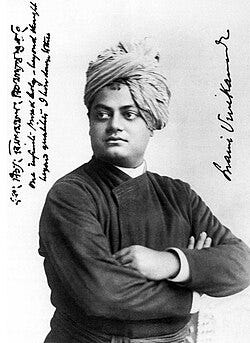
This modern, global understanding of Hinduism as an inclusive, philosophy-forward system was significantly shaped by figures like Swami Vivekananda. His famous 1893 address at the World’s Parliament of Religions in Chicago relied heavily on Vedantic philosophy to introduce the depths of Hinduism to the Western world, firmly cementing its identity not as a rigid dogma, but as a living, breathing Knowledge System.
Thank you for reading! This article is part of an ongoing series exploring the intellectual architecture of human belief and ancient Hindu traditions. If you missed the previous installment, you can read Part 1: “Belief in God is a Human Compulsion”.
In the next essay, we will turn our attention to one of the most radical features of Hinduism: the validity of Hindu atheism.
Subscribe to ensure you don’t miss the next piece. How do you feel about the idea of a religion accommodating atheism? Let’s connect in the comments below!