What, not Who, is God?
Decoding Hindu Gods…
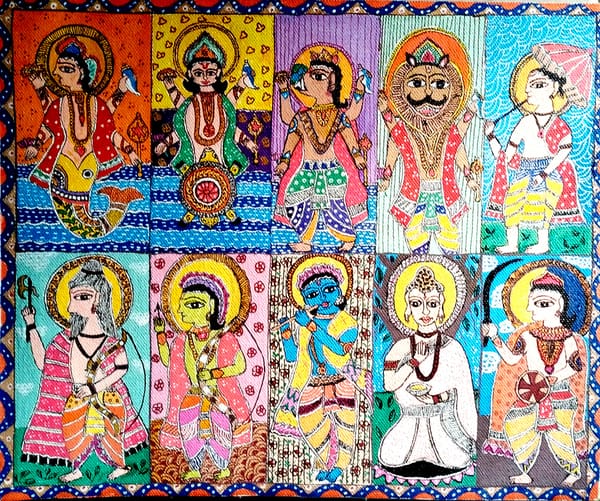
Hindu Gods and Goddesses can be very confusing! There are so many different deities, each ruling over a specific domain — Ganesh, the elephant-headed God for good luck, Lakshmi for wealth, Shiva for destruction, Sarasvati for knowledge, Brahma for creation… and each has a unique personality! On top of that, Hindu deities seem to be categorized using different terms — Devas, Ishvara, Avataras — which are not just different words for the same concept of God; they each carry a distinct meaning!
The Formless Brahman
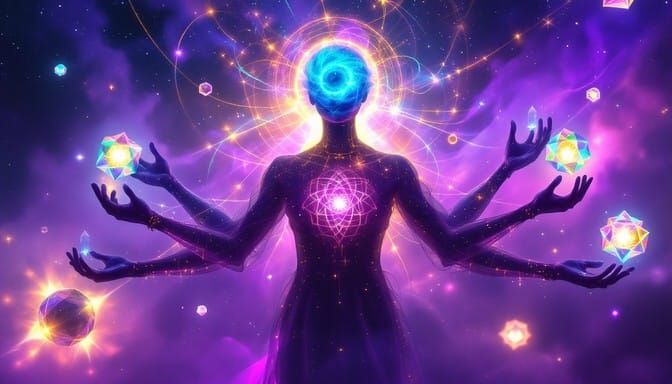
Then there also is Brahman — not a who, but a what — it is the impersonal, formless and attribute-free absolute reality. This entity is often referred to as Nirguna Brahman or Brahman without attributes.
Wikipedia describes Brahman as follows:
‘That’ from which all existence proceeds, and to which everything returns, the origin and cause of all that exists. In contemporary Hindu metaphysics it is the highest universal principle, the Ultimate reality of the universe.
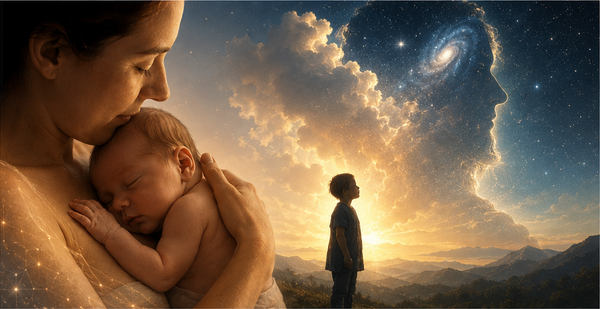
Brahman is not the universe’s external creator, but is itself the “thing” that makes up the universe.
Moreover, Brahman is an entity that is entirely unconcerned with us humans — our needs, sufferings, actions (good or bad), or our feelings. It does not step in to help us in our time of need, nor does it judge our deeds or punish our mistakes.
Q. So, which do Hindus consider the real God — Brahman or those numerous other Gods with personalities?
A. Well, actually it is both. The Gods with personalities are simply different manifestations of Brahman. While Brahman — the primordial essence of everything — is formless and attribute-free, it holds the potential to be or do whatever is needed. The “Gods with personality” are active expressions of this potential. These deities are known as Devas and Devis, and they each manifest a different quality existing within Brahman.
Q. Isn’t there a Creator God Brahma in the Hindu pantheon? Is he the one who created Brahman?
A. No, Brahma, like Ganesh, Lakshmi, Vishnu, Shiva and all other Devas and Devis, is another manifestation of Brahman. According to Hindu philosophy, Brahman has always existed and will never cease to exist. As far as its origins go, Hindu philosophy admits to not knowing who created Brahman, or how it came to be. In fact, ancient texts express doubt over whether that answer is even knowable!
Q. So, if the Universe or Brahman was not created, what did Brahma create?
A. We will get to that shortly when we explore the role of Devas. But before that, we need to understand another crucial concept known as Ishvara — who is also equated to God!
Ishvara: The Brahman with Personality
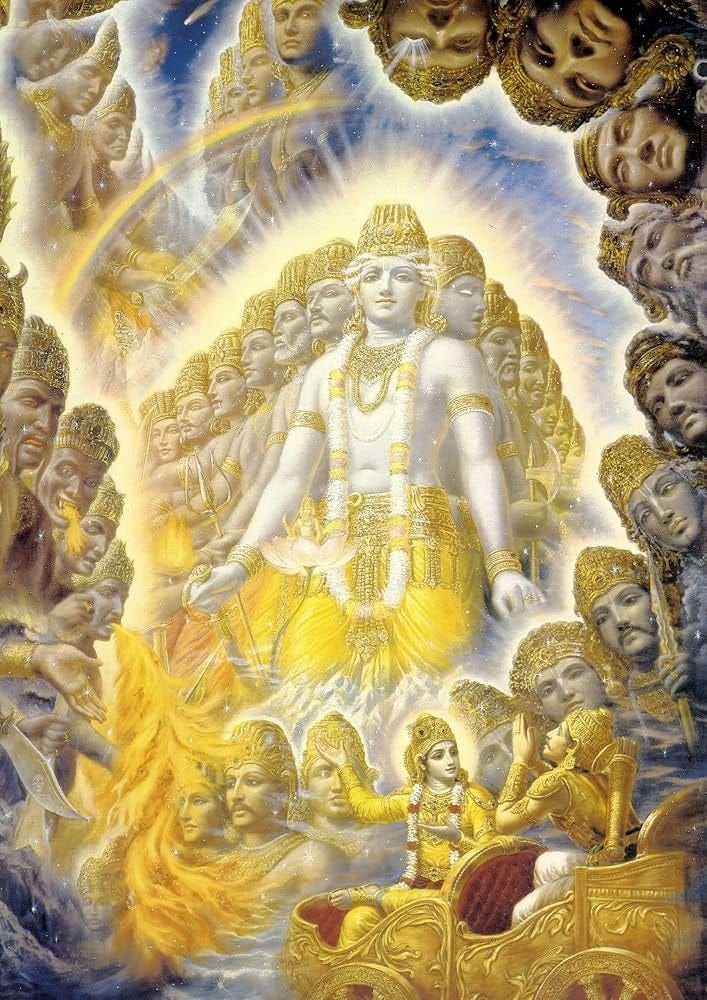
Earlier we mentioned the formless and attribute-free nature of Nirguna Brahman. While it remains attribute-free, it holds the potential for a vast variety of characteristics. When necessary, Brahman takes on a form and exhibits attributes, and is then referred to as Saguna Brahman (Brahman with attributes). In this active form, Brahman is known as Ishvara.
Brahman, the abstract entity that is unconcerned with human affairs, could hardly interest us in our daily life. And that is exactly the case — there are no temples dedicated to Brahman, nor is it prayed to. On the other hand, Ishvara — the form that exhibits limitless powers and manifests the qualities valuable to human beings — is highly revered.
The Currency of “Godliness”: What Humans Actually Value
Often, we humans are concerned with specific forms, qualities or powers of Ishvara. For example, a farmer might be interested in rain or water, praying for that particular manifestation of Ishvara. A warrior might be interested in strength, power or Shakti. A student might wish for knowledge, someone who is hurting might wish for kindness, and someone else might seek good luck. Whether it is a physical form, a virtue, a quality or often even a certain act (creating, architecting) — it is these attributes of Ishvara that we humans care about. I like to think of these qualities of Ishvara as “Godliness” — the exact things about “God” that we actually value and revere!
Devas: Godliness Personified
Hindus have identified every different quality, form or act of Ishvara that they value, and have anthropomorphized each of them. As humans, we appreciate the inanimate qualities of Brahman, but find it far easier to relate to them when they are projected into personified forms. Therefore, every type of “Godliness” was personified into an independent Deva or Devi. One might think of Devas as perfect personified representations of each god-like quality. That is how Agni (fire), Indra (storms), Vishnu, Lakshmi, Sarasvati and so many other Devas and Devis came to be.
One of these Devas is Brahma the Creator. That title can be hard to grasp initially: if the Universe or Brahman always existed, what does Brahma create? For this reason, Brahma is often accurately identified as an “Architect” rather than a “Creator”.
Trimurti: The Hindu Trinity
While Brahman, the primordial essence, has always existed, the world in its present form required deliberate action to take shape. Brahman is constantly reconfiguring into different forms — of course, once having taken form, it is known as Brahmāṇḍa (the Universe). This grand cosmic cycle involves creation as well as destruction, and for the duration that it exists in a particular form, it also needs sustenance or preservation.
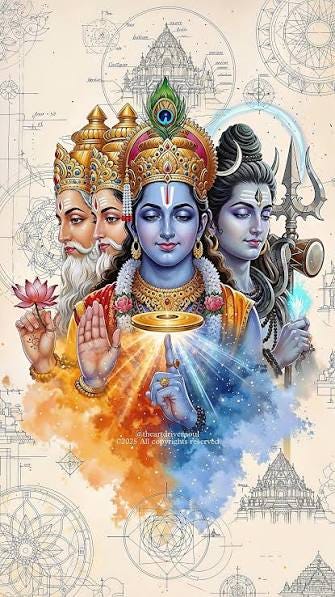
It isn’t anyone outside of Brahman that performs these acts; the power to execute this reconfiguration exists completely within Brahman itself — much like a cosmic shape-shifter. However, each of those acts is distinctly acknowledged for the unique value it provides. These principal actions of Ishvara — Creation, Preservation, and Destruction — are attributed to the trimurti (trinity) of Devas — Brahma, Vishnu, and Shiva.
Growth of the Hindu Pantheon
As Hinduism spread across the Indian subcontinent, it encountered hundreds of diverse tribal, regional, and indigenous cultures. Instead of rejecting their local deities as “false gods”, the tradition practiced ultimate spiritual inclusion. It looked at the local deity, identified the underlying quality or “Godliness” it represented, and declared it a regional manifestation of Ishvara.
- Example: Local mother goddesses were recognized as forms of Shakti or Durga, while a local tribal deity like Jagannath was recognized as a form of Vishnu.
And why wouldn’t those deities be incorporated? After all, the very idea of “Godliness” are those attributes that provide value to our individual lives. The experience of finding value is often subjective, so Godliness is naturally expected to be different for different people. For someone who believes in the universality of Ishvara, discovering yet another form or valuable quality of the divine can only make it even more reverential and desirable.
Ishta-Deva and Sampradaya
Individual communities continued to revere their local deities, acknowledging the supreme importance of its specific attributes. However, they also viewed the deity as a form of Brahman — their chosen face of Ishvara. Over time, this gave rise to the concept of Ishta-Deva (Cherished Deity), where a community considered a specific Deva as their ultimate Ishvara. While their overarching Hindu beliefs required them to respect and revere all Vedic deities, they took on the unique responsibility of serving their Ishta-Deva.
This beautiful diversity gave rise to the idea of Sampradaya — a formal lineage and community of practitioners bound together by an unbroken chain of teachers, who followed their own distinct philosophical teachings and rituals to worship their chosen form of Ishvara.
Conclusion
The Hindu concept of God is a beautiful synthesis of two core realities: Brahman, the foundational fabric that makes up everything in existence, and “Godliness” — the infinite, unmanifested potential of virtues and attributes contained within that fabric. By personifying these raw cosmic qualities into relatable deities or Devas, Hinduism provides us with a way to appreciate and respect the raw power of nature, ingeniously leveraging our inherent human compulsion to believe in the divine.
Clarification
The concept of Brahman is widely considered central to Hindu philosophy — however, this specific meaning emerged primarily from one particular school: The Vedanta school of thought. Today, Vedanta is the most prevalent Hindu philosophy and almost always the framework used to describe modern Hinduism and its ideas.
As distinct from Abrahamic religions, Vedanta does not require external “God” to explain the existence of our world. And yet, paradoxically, amongst all traditional Hindu schools of thought, Vedanta most aggressively supports the idea of a supreme, personal supernatural being in the form of Ishvara. Whether it did this to support the inherent human compulsion to believe in the divine, or due to historical pressure to accommodate the massive popularity of the regional Bhakti (devotional) movements, Vedanta actively validates Ishvara and encourages practices in deep reverence to it.
Furthermore, Vedanta also does not rely on a cosmic judge to force humans to behave in desirable ways, nor does it look to an external deity to define morality. Instead, Hinduism developed highly sophisticated cosmic systems to explain our earthly condition and show our own actions as its direct cause — the Law of Karma.
However, at the absolute core of this entire philosophy remains the definition of Brahman and its intimate relation with us Humans. Brahman is the foundational “thing” that makes up the entire universe, including you and me! Because we are woven from this exact fabric, we inherently carry its infinite potential. It is entirely up to us — not an independent, faraway “God” — to do with our lives what we wish. This is the exact realization understood by certain mortal beings of the past, who pushed their capabilities so far that they became recognized as “Avataras” or physical incarnations of the Divine on Earth. And that is the story we will explore in the next essay.
Enjoyed this deep dive into Eastern philosophy?
This essay is part of a multi-part series decoding ancient spiritual frameworks for the modern world. In the next piece, we will explore the fascinating mechanics behind Avataras — mortal beings who pushed human limits to become physical incarnations of the Divine.
Continue reading the next article on Hindu Avatars, or catch-up by reading the previous essay on Hindu Atheism.
Subscribe, so you never miss an update, and drop a comment below sharing your thoughts on the concept of Brahman!