From Human to Divine: Philosophy of the Avatar
Discover the true meaning of the Hindu Avatar. Explore how the Puranas use cosmic allegory to map human evolution, from the Dus Avatara to the Buddha.
Tat Tvam Asi
The ultimate realization of Hindu philosophy is captured in the ancient Sanskrit phrase: Tat Tvam Asi ("Thou Art That"). If Brahman is the spiritual fabric of the entire universe, then your innermost self—your Atman—is made of that exact same fabric.
While it might not always feel like it, this divine potential lies within each of us, waiting to be awakened. In fact, when a Hindu bows and says Namaste, she is literally saying, "The Godliness inside me recognizes and bows to the Godliness inside you."
“Thou Art That” in Practice
This worldview makes god-like reverence toward humans quite common across India. Pictures of deceased parents are frequently placed alongside idols of deities in home shrines. Doctors receive divine levels of respect for their ability to save lives.
High-achieving individuals in other fields gain legendary, cult-like followings. India’s “God of Cricket,” Sachin Tendulkar, is a prominent modern example. Politicians, film celebrities, sport icons, and spiritual leaders are regularly worshipped, sometimes becoming the direct focus of prayer rituals.
In many global religions, referring to a human as God is considered blasphemy. In Hinduism, it is common practice. Every Hindu child grows up being told that the divine lies within them, encouraging them to realize their highest potential. When someone achieves greatness, the culture naturally recognizes them for the "godliness" they have manifested.
Defining the Avatar
Hinduism has a specific word for these supreme achievers: Avatar, which translates to the physical incarnation of a divine principle. When an earthly, mortal being achieves a supreme level of cosmic impact, they are recognized as an Avatar. Like Deva (god) or Ishvara (supreme lord), an Avatar is a manifestation of the divine—except it is the form that is explicitly born on and lives on Earth.
The Dus Avatara: A Blueprint of Evolution
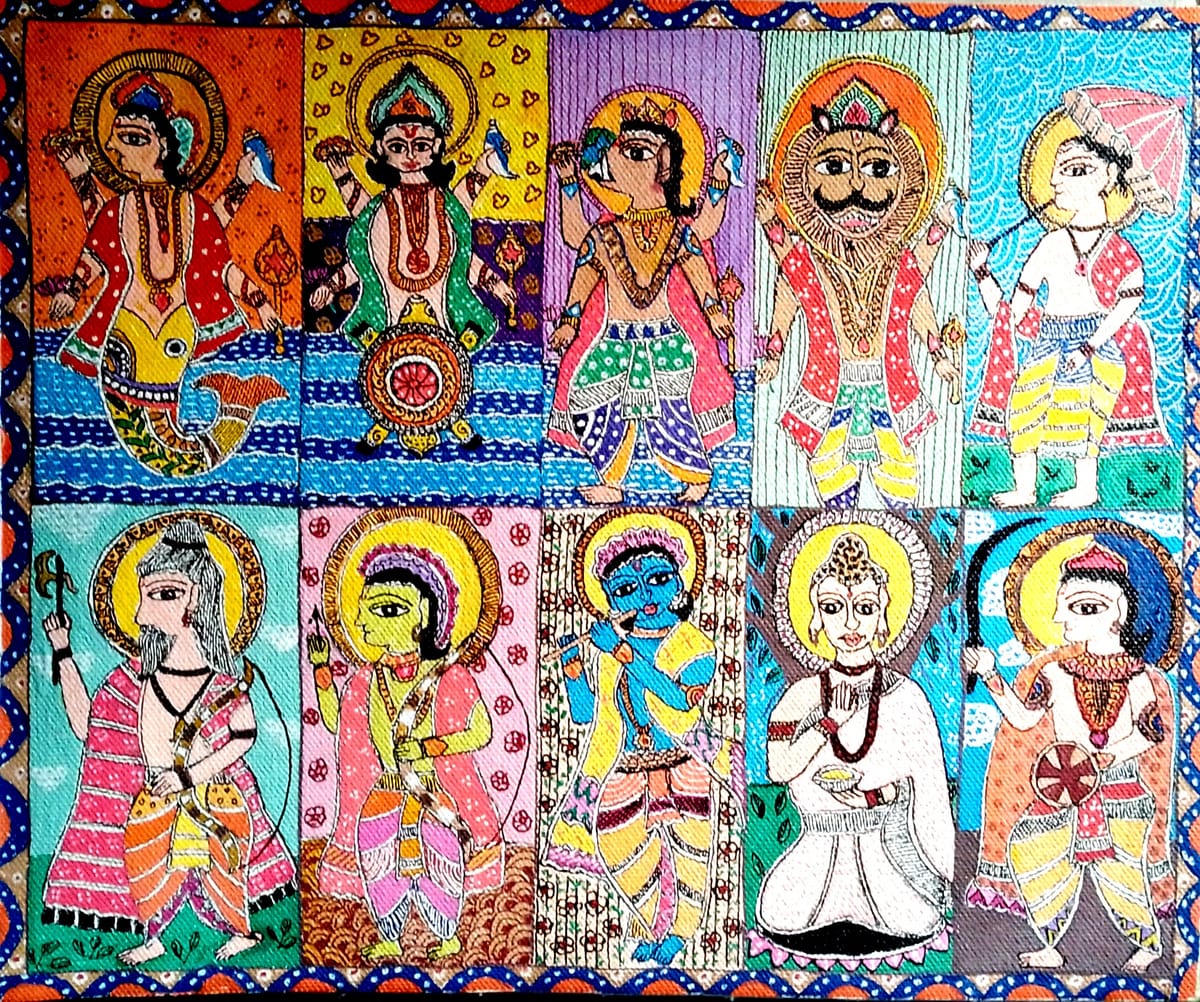
The most famous expression of this concept is the Dus Avatara, or the Ten Incarnations. Rather than mere mythology, these are stories of ten mortal forms who had a massive impact on our world, sent to restore a broken world or elevate life on the planet.
- Matsya (The Fish): Life beginning inside the primeval waters.
- Kurma (The Tortoise): The amphibian moving from water onto land.
- Varaha (The Boar): The wild land animal conquering the earth.
- Narasimha (The Man-Lion): The transitional, hybrid state between animal and human.
- Vamana (The Dwarf): The early human form, representing the dawn of intellect.
- Parashurama (The Axe-Warrior): The aggressive, rough human living in primitive societies.
- Rama (The Ideal King): The highly civilized, duty-bound social human focused on building a functioning society.
- Krishna (The Divine Statesman): The fully realized, complex human managing modern-day politics, philosophy, and war.
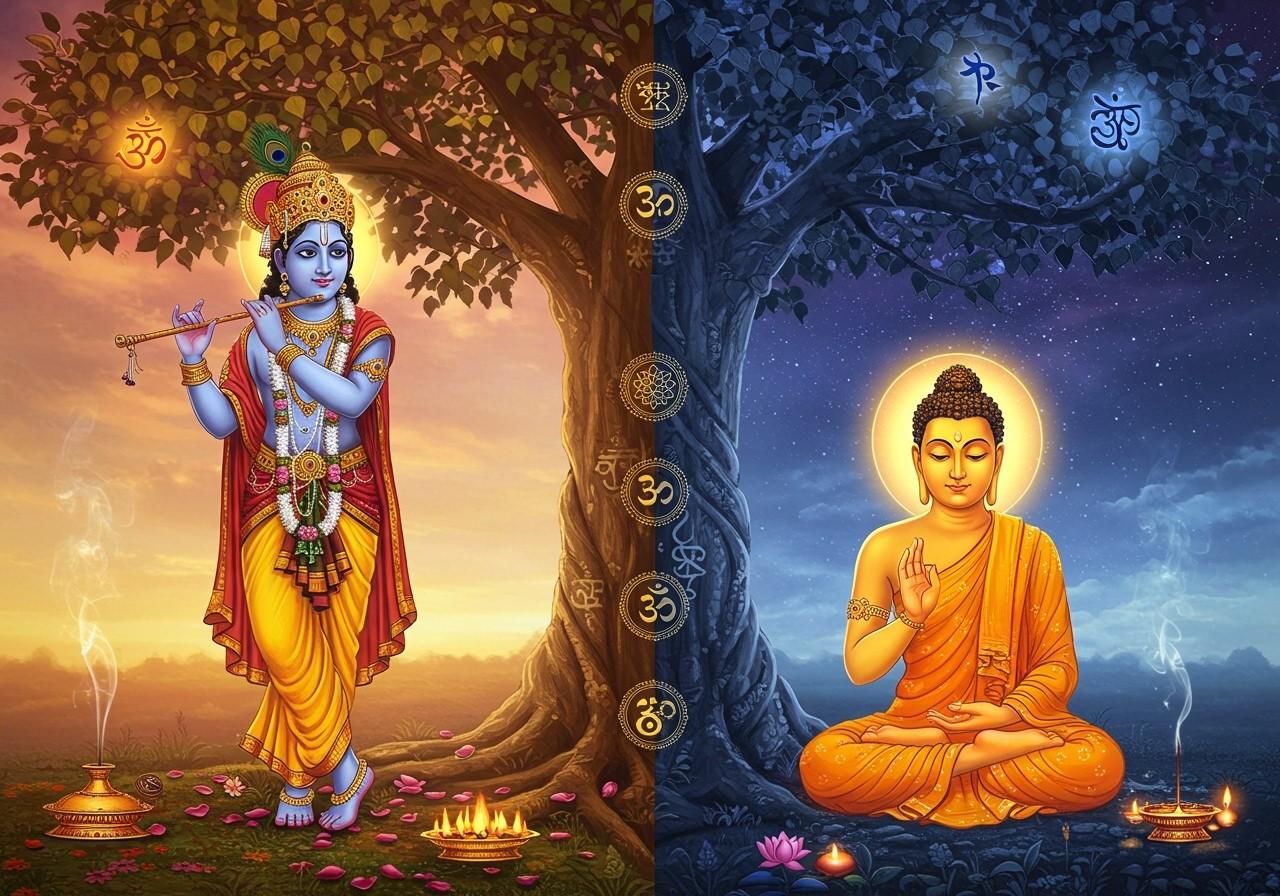
- Buddha (The Enlightened Sage): The radical evolutionary step inward, transitioning from worldly action to conquering the mind itself through deep reflection and radical compassion.
- Kalki (The Future Reset): The final manifestation appearing at the end of time to dissolve a degraded era and reset the cosmic cycle.
Interestingly, the chronological sequence of the Dus Avatara, described in the Puranas, closely mirrors the biological evolution of species identified centuries later by Charles Darwin.
The Infinite Ripples: Other Avataras
While the Dus Avatara is the most famous list, it is by no means the only one. The Puranas explicitly state that the incarnations of the Divine are as infinite as the ripples on a lake. The Bhagavata Purana, for instance, lists 22 or 24 primary avatars. This expanded catalog proves that the concept is fundamentally about honoring exceptional human contributions across science, literature, and philosophy, including figures like:
- Vyasa: The compiler of the Vedas and author of the Mahabharata, representing the Avatar of Literature and Knowledge.
- Kapila: The ancient philosopher who founded the Samkhya school of thought.
- Dhanvantari: The legendary physician who brought the science of Ayurveda (medicine) to humanity.
Similarly, the goddess-centric tradition of Shaktism reveres its own lineage of Avataras—manifestations of dynamic cosmic energy (Shakti) credited with destroying deep-seated ignorance and protecting the vulnerable:
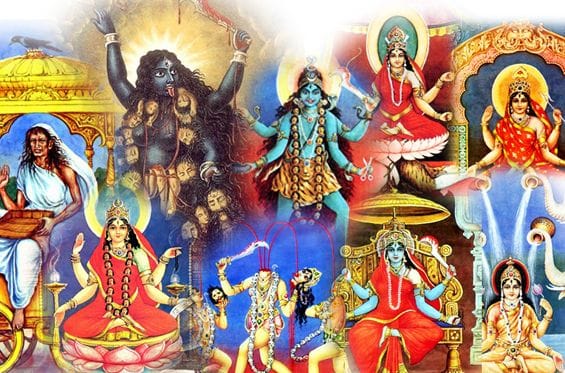
- Durga (The Invincible Fortress): Symbolizes the ultimate synthesis of positive cosmic energies, proving that courage can overcome insurmountable crises.
- Chandi (The Fierce Reformer): Represents a state of righteous, unyielding anger that tears down systemic injustice and shatters toxic egos.
- Chamunda (The Inner Shadow Slayer): She symbolizes the psychological breakthrough required to eradicate internal demons like pride and passion.
- Kali (The Force of Transformation): Represents the raw power of time and change, reminding us that old, decaying structures must dissolve to make way for new growth.
- Mahakali (The Infinite Matrix): The boundless, primordial energy of the universe from which all life emerges and to which it eventually returns.
The Non-Hindu Avatar
The human forms within the Dus Avatara, like Rama and Krishna, are globally famous due to the Ramayana and Mahabharata. However, the inclusion of the Buddha in this orthodox Hindu list often intrigues non-Hindus.
The Buddha, born a Hindu, grew up to explicitly oppose the rigid rituals and priestcraft of his day—so much so that his teachings formed a distinct path. He moved away from the idea of a personal creator God, making Buddhism a non-theistic philosophy. Yet, he is revered on Hindu altars as a God himself.
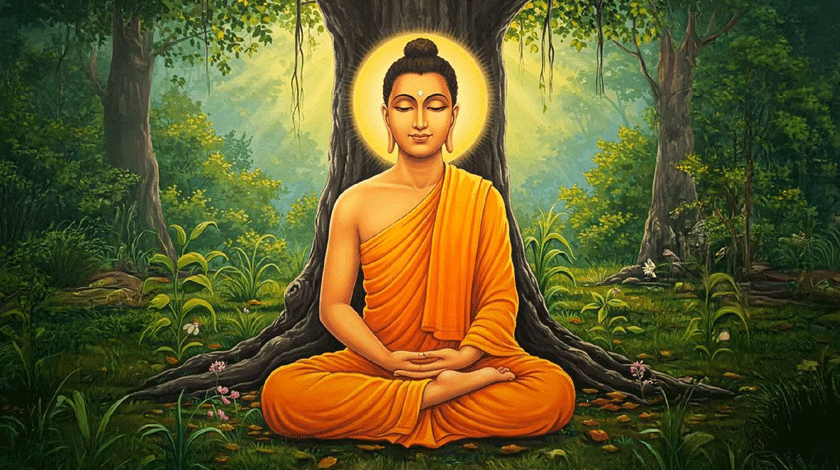
While critics sometimes claim that naming the Buddha an avatar was a strategic move by Hindu priests to poach Buddhist followers, this narrative falls apart under scrutiny. In a historical world where referencing a rival faith's figure as God was widely considered blasphemy, assigning divine status to an anti-ritualistic reformer was a massive theological risk. In fact, it faced immense internal pushback, which is why alternative versions of the Dus Avatara exist that remove the Buddha entirely and substitute Krishna's brother, Balarama.
The Buddha's inclusion was not political strategy; it was an act of genuine, radical intellectual appreciation by wise Hindu sages.
Beyond Labels: The Radical Inclusivity of Truth
The profound reverence for the Buddha highlights the deep philosophical ties between the traditions. While practicing Hinduism (Vedanta) differs from Buddhism, that exact same philosophical contrast exists within Hinduism itself between the schools of Vedanta and Samkhya. This is no coincidence: the Buddha's earliest spiritual teachers taught proto-Samkhya methods.
Hinduism traditionally holds that any system of thought must be respected as long as it genuinely guides a seeking community. It honors the essence of truth over religious labels. The Buddha chose to distance himself from the corrupted, misleading practices of the era. Yet, true to the principle of Tat Tvam Asi, discerning Hindus could look at the Buddha's immense spiritual purity and see nothing less than the divine.
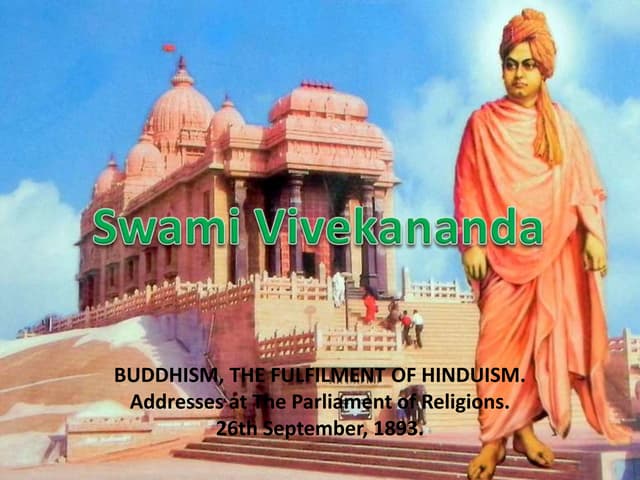
This spirit of open exploration remains alive today. Swami Vivekananda, who introduced Vedantic Hinduism to the West, is well-known for having deeply studied Buddhism. At one point in his journey, he was famously conflicted about the exact path he wanted to follow. His declaration that 'Hinduism cannot live without Buddhism, nor Buddhism without Hinduism'—delivered in his historic address, 'Buddhism, the Fulfillment of Hinduism'—perfectly conveys his deep conviction. In the end, while navigating between Buddhism and the various schools of Hinduism, he chose to anchor his practice in Vedanta. Similarly, many modern-day practitioners of Jainism continue to harmoniously identify as Hindus. As such, practicing a preferred tradition—even one that rejects orthodox Vedic authority—is completely acceptable within the fluid landscape of Hinduism.
Genesis of the Avatara Doctrine
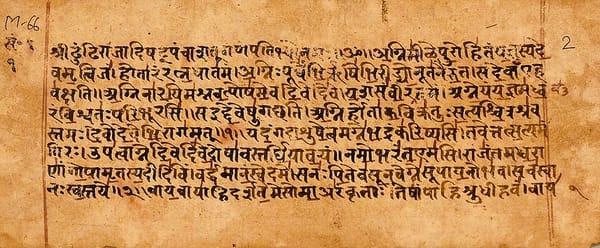
Historically, the literal noun avatāra does not explicitly appear in the earliest Vedic literature. Instead, the theological framework slowly matured over thousands of years until the word Avatara finally appeared in its fully developed form in Puranic literature, after the 6th century CE.
To truly understand the Avataras, we must understand the language of the Puranas. The Puranas are not rigid, literal history books; they are cosmic allegories. When a human being achieves a state of absolute genius or permanently alters the course of human history, their story naturally becomes legendary. Over centuries, oral traditions magnify their deeds.
The Puranic writers took these magnified histories and gave them cosmic clothes. If a leader named Rama defeated a powerful and ruthless king, while maintaining a code of absolute ethics, the Puranas didn't just record his battle strategies—they described him as the physical descent of Vishnu (the cosmic principle of preservation). By wrapping human greatness in a garb of divinity, the Puranas ensured these moral and evolutionary milestones would never be forgotten.
Accordingly, the word Avatara was derived from the Sanskrit ava, meaning "down," and tṛ, meaning "to cross or descend." While traditional mythology portrays Avataras as celestial Devas descending to earth in mortal form to rescue the world in times of crisis, the underlying philosophical truth remains unchanged. The concept of the Avatara was originally intended to convey the fundamental oneness of mortal beings with Brahman—thus implying that we all possess its limitless cosmic potential. The Puranic writers simply found that casting human achievements into brilliant, allegorical stories was the most effective way to help humanity absorb, remember, and realize their cosmic potential.
Thank you for reading!
This article is part of an ongoing series that explores Hindu philosophy and religion. This essay on Hindu Avatar completes the discussion about what God means in Hinduism, with the previous article discussing Devas and Ishvaras. If you prefer, you might start with the first article - “Belief in God is a Human Compulsion”.